

 Image 1 of 1
Scientific name: Betta mahachaiensis
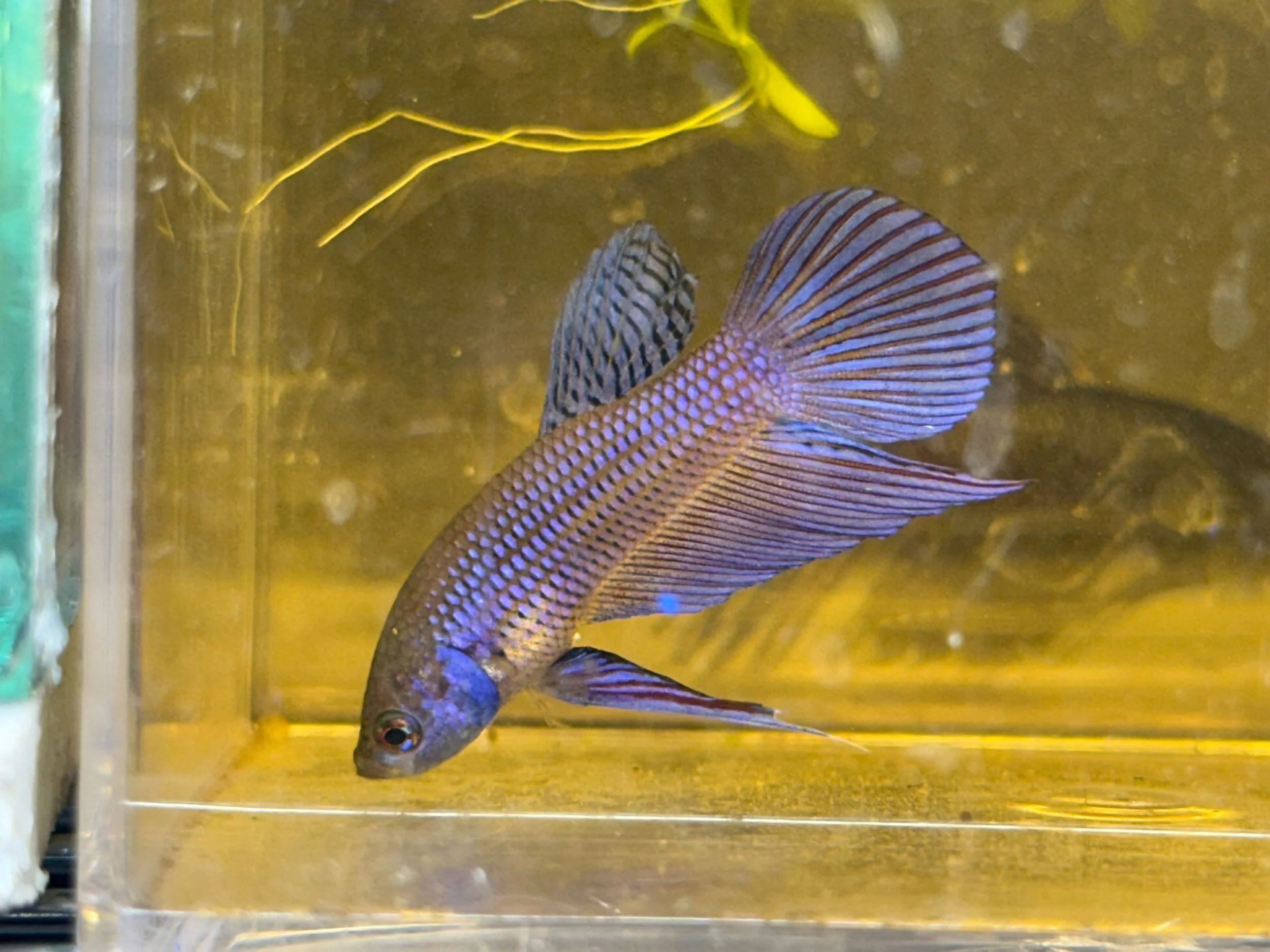
Common name: Blue Mahachai Betta
Origin: Thailand (Mahachai region – brackish coconut groves and canals)
Type: Wild-type betta (related to Betta splendens)
Tank size: 10–15 gallons for a single male
Water type: Fresh to slightly brackish (add a bit of marine salt if desired)
Temperature: 76–82°F (24–28°C)
pH: 6.5–7.5
Hardness: Moderate
Décor: Dense plants, floating cover, leaf litter, gentle filtration, low flow
Lid: Tight-fitting — they jump!
Omnivore/carnivore: Prefers live or frozen foods — bloodworms, brine shrimp, daphnia
Can be trained to eat pellets
Feed small portions 1–2 times daily
Temperament: Males territorial but calmer than domestic bettas
Best kept singly or in species pairs (only for breeding)
Avoid housing with fin-nippers or aggressive tankmates
Type: Bubble-nester
Male builds nest under floating plants
Courtship: Male wraps female; eggs are placed in the nest
Parental care: Male guards and tends to the eggs until fry are free-swimming
Fry care: Infusoria → baby brine shrimp
Recognized by metallic blue-green iridescence and wild-type patterning
More tolerant of brackish water than other bettas
Conservation interest species — populations in the wild are limited
Scientific name: Betta mahachaiensis
Common name: Blue Mahachai Betta
Origin: Thailand (Mahachai region – brackish coconut groves and canals)
Type: Wild-type betta (related to Betta splendens)
Tank size: 10–15 gallons for a single male
Water type: Fresh to slightly brackish (add a bit of marine salt if desired)
Temperature: 76–82°F (24–28°C)
pH: 6.5–7.5
Hardness: Moderate
Décor: Dense plants, floating cover, leaf litter, gentle filtration, low flow
Lid: Tight-fitting — they jump!
Omnivore/carnivore: Prefers live or frozen foods — bloodworms, brine shrimp, daphnia
Can be trained to eat pellets
Feed small portions 1–2 times daily
Temperament: Males territorial but calmer than domestic bettas
Best kept singly or in species pairs (only for breeding)
Avoid housing with fin-nippers or aggressive tankmates
Type: Bubble-nester
Male builds nest under floating plants
Courtship: Male wraps female; eggs are placed in the nest
Parental care: Male guards and tends to the eggs until fry are free-swimming
Fry care: Infusoria → baby brine shrimp
Recognized by metallic blue-green iridescence and wild-type patterning
More tolerant of brackish water than other bettas
Conservation interest species — populations in the wild are limited