

 Image 1 of 1
They are about 1.5” in size
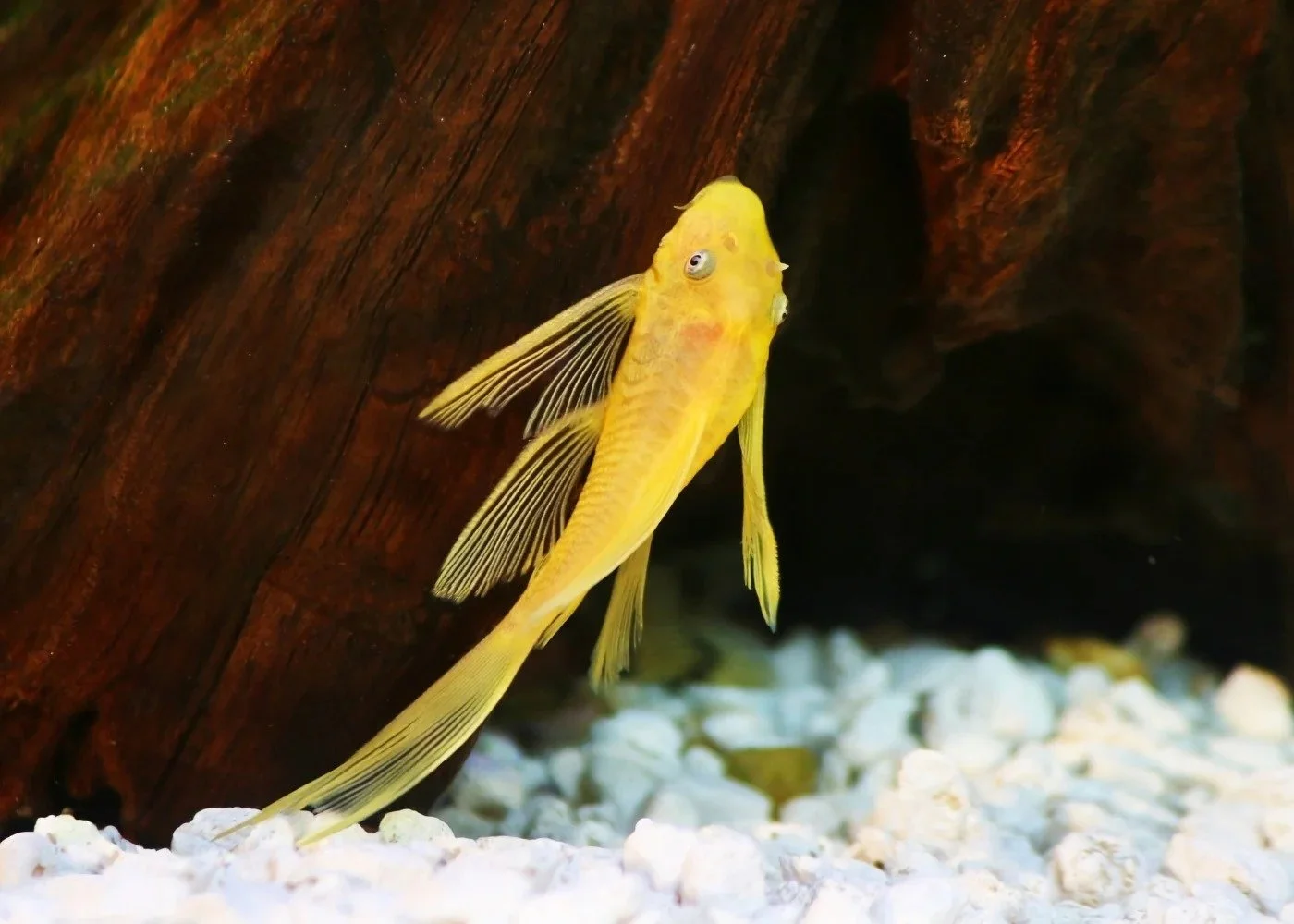
Common name: Long Fin Bristlenose Pleco
Scientific name: Ancistrus sp.
Family: Loricariidae (Armored Catfish)
Origin: South America (Amazon Basin)
Size: 4–6 inches (10–15 cm)
Lifespan: 5–10 years
Tank size: 20+ gallons (larger for multiple plecos)
Temperature: 73–81°F (23–27°C)
pH: 6.5–7.5
Water hardness: 2–12 dGH
Filtration: Moderate to strong, with good oxygenation
Substrate: Smooth gravel or sand
Décor: Driftwood (they graze on it), caves, plants, hiding spots
Type: Primarily herbivore (algae eater)
Foods:
Algae wafers
Blanched vegetables (zucchini, cucumber, spinach)
Occasional protein (bloodworms, shrimp pellets)
Tip: Provide driftwood—helps digestion and mimics their natural diet.
Temperament: Peaceful, shy
Best kept with: Other peaceful community fish (tetras, guppies, rasboras, etc.)
Avoid: Aggressive or large predatory fish
Activity: Mostly nocturnal; active at night or low light
Setup: Caves or tubes for males to guard eggs
Behavior: Male guards eggs and fans them until hatching (4–10 days)
Fry care: Feed with algae wafers, blanched veggies, and spirulina powder
Keep water clean—sensitive to poor quality.
Provide plenty of hiding spots to reduce stress.
Avoid overstocking—territorial with other bottom dwellers.
They are about 1.5” in size
Common name: Long Fin Bristlenose Pleco
Scientific name: Ancistrus sp.
Family: Loricariidae (Armored Catfish)
Origin: South America (Amazon Basin)
Size: 4–6 inches (10–15 cm)
Lifespan: 5–10 years
Tank size: 20+ gallons (larger for multiple plecos)
Temperature: 73–81°F (23–27°C)
pH: 6.5–7.5
Water hardness: 2–12 dGH
Filtration: Moderate to strong, with good oxygenation
Substrate: Smooth gravel or sand
Décor: Driftwood (they graze on it), caves, plants, hiding spots
Type: Primarily herbivore (algae eater)
Foods:
Algae wafers
Blanched vegetables (zucchini, cucumber, spinach)
Occasional protein (bloodworms, shrimp pellets)
Tip: Provide driftwood—helps digestion and mimics their natural diet.
Temperament: Peaceful, shy
Best kept with: Other peaceful community fish (tetras, guppies, rasboras, etc.)
Avoid: Aggressive or large predatory fish
Activity: Mostly nocturnal; active at night or low light
Setup: Caves or tubes for males to guard eggs
Behavior: Male guards eggs and fans them until hatching (4–10 days)
Fry care: Feed with algae wafers, blanched veggies, and spirulina powder
Keep water clean—sensitive to poor quality.
Provide plenty of hiding spots to reduce stress.
Avoid overstocking—territorial with other bottom dwellers.