

 Image 1 of 1
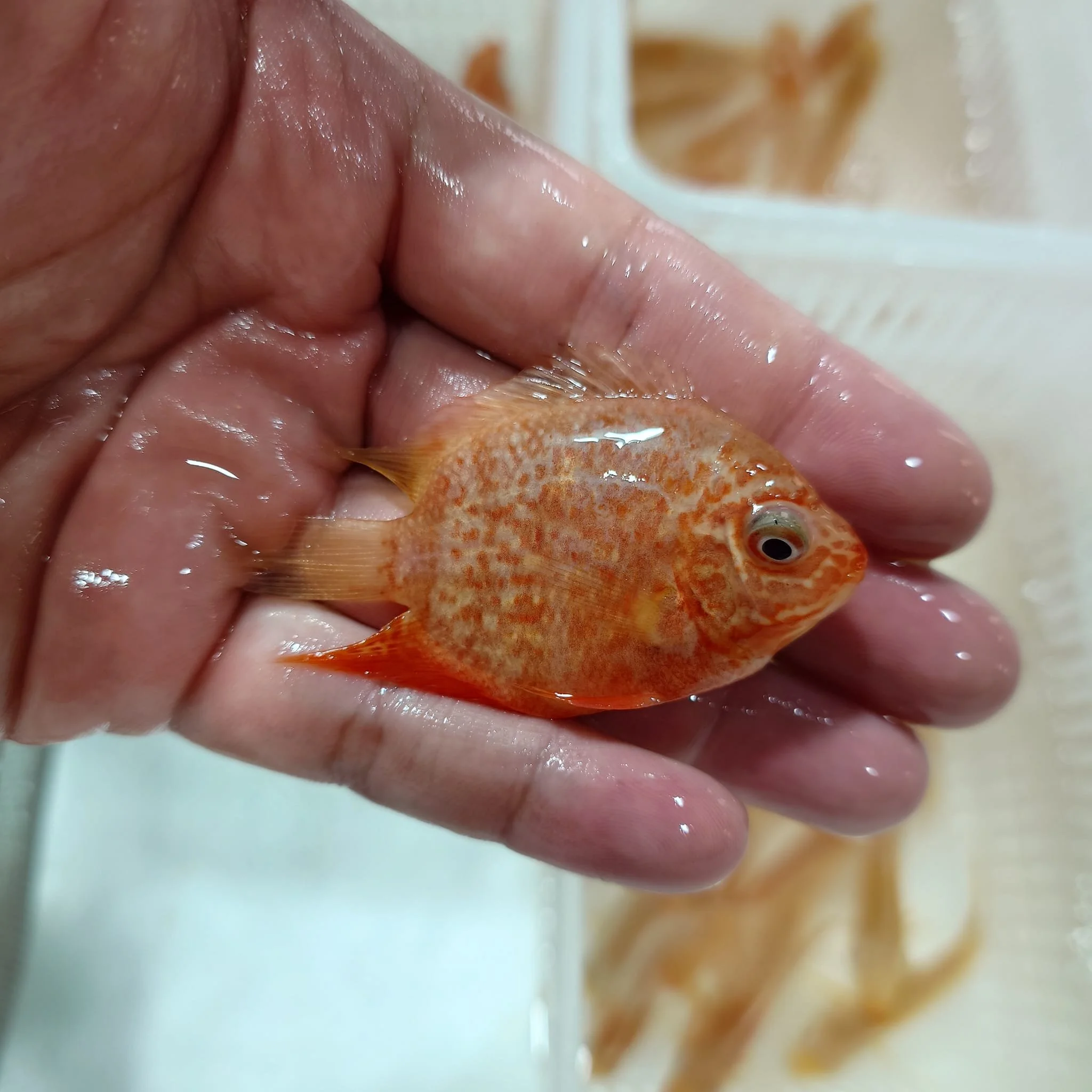
Scientific name: Heros severus (selectively bred color morph)
Common names: Red Spotted Severum, Super Red Severum, Red Severum
Adult size: 7–8 inches (18–20 cm)
Lifespan: 10–15 years
Temperament: Semi-aggressive; generally peaceful for a cichlid, but can be territorial
Tank level: Mid to upper
Tank size: Minimum 55 gallons (larger preferred for pairs or tankmates)
Substrate: Sand or fine gravel
Decor: Driftwood, rocks, caves for hiding; sturdy plants (may nibble on softer ones)
Lighting: Moderate
Temperature: 76–82°F (24–28°C)
pH: 6.0–7.5
Hardness: Soft to moderately hard (4–15 dGH)
Filtration: Strong and clean — they produce a fair amount of waste
Type: Omnivore
Foods: High-quality cichlid pellets, frozen or live foods (bloodworms, brine shrimp), and vegetables (peas, spinach, zucchini)
Feeding frequency: 1–2 times daily, small portions
Compatible with: Peaceful to semi-aggressive medium/large fish (silver dollars, larger tetras, angelfish, plecos)
Avoid: Fin nippers, tiny fish, or highly aggressive cichlids
Type: Substrate spawner; forms monogamous pairs
Behavior: Parents guard eggs and fry; need flat surfaces for spawning
Note: Hard to sex until mature — males often have more spots and pointed fins
Hole-in-the-head (from poor water quality or nutrition)
Overfeeding → obesity
Aggression during breeding
Scientific name: Heros severus (selectively bred color morph)
Common names: Red Spotted Severum, Super Red Severum, Red Severum
Adult size: 7–8 inches (18–20 cm)
Lifespan: 10–15 years
Temperament: Semi-aggressive; generally peaceful for a cichlid, but can be territorial
Tank level: Mid to upper
Tank size: Minimum 55 gallons (larger preferred for pairs or tankmates)
Substrate: Sand or fine gravel
Decor: Driftwood, rocks, caves for hiding; sturdy plants (may nibble on softer ones)
Lighting: Moderate
Temperature: 76–82°F (24–28°C)
pH: 6.0–7.5
Hardness: Soft to moderately hard (4–15 dGH)
Filtration: Strong and clean — they produce a fair amount of waste
Type: Omnivore
Foods: High-quality cichlid pellets, frozen or live foods (bloodworms, brine shrimp), and vegetables (peas, spinach, zucchini)
Feeding frequency: 1–2 times daily, small portions
Compatible with: Peaceful to semi-aggressive medium/large fish (silver dollars, larger tetras, angelfish, plecos)
Avoid: Fin nippers, tiny fish, or highly aggressive cichlids
Type: Substrate spawner; forms monogamous pairs
Behavior: Parents guard eggs and fry; need flat surfaces for spawning
Note: Hard to sex until mature — males often have more spots and pointed fins
Hole-in-the-head (from poor water quality or nutrition)
Overfeeding → obesity
Aggression during breeding