

 Image 1 of 2
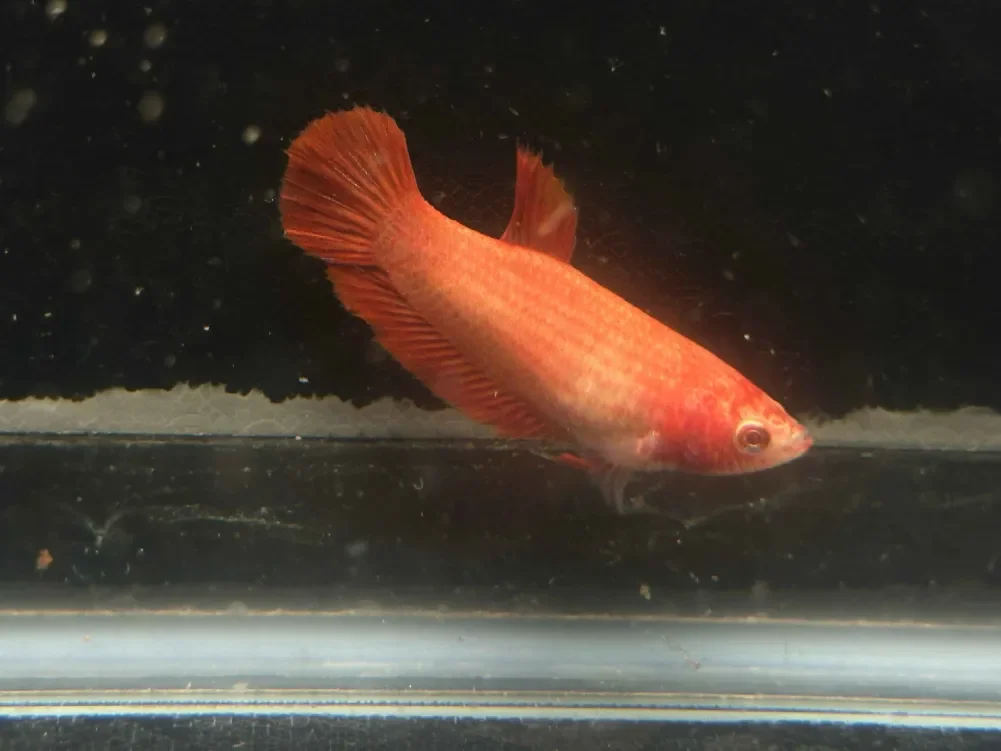 Image 2 of 2
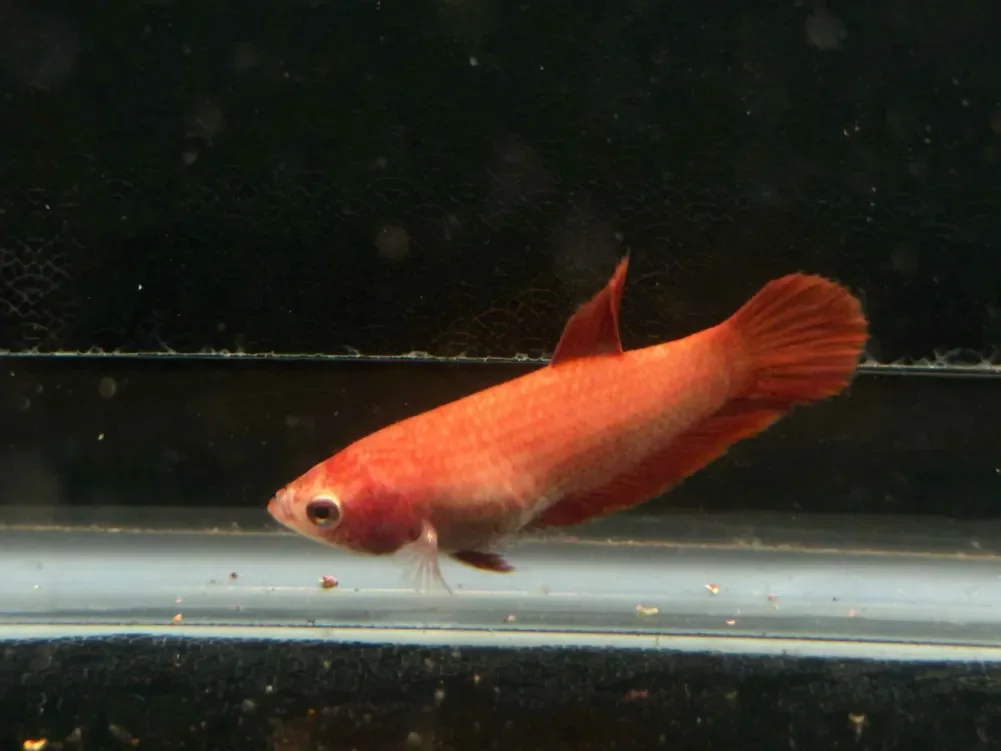
Short fins (plakat type) with a Halfmoon 180° tail spread.
Females are usually more compact, with shorter ventral fins and an egg spot (ovipositor).
Colors: wide variety—solid, bi-color, koi, dragon, marble, metallic.
Tank size: Minimum 5 gallons; 10+ gallons for groups.
Temperature: 78–82°F (25.5–28°C).
pH: 6.5–7.5.
Filtration: Gentle flow; they prefer calmer water.
Aquascape: Plants, hides, and soft decor; they appreciate line-of-sight breaks.
Generally less aggressive than males but still can be territorial.
Can be kept:
Solo (always safe)
In a sorority (5+ females, heavily planted, careful monitoring)
Curious, active swimmers, and good hunters of small live foods.
High-protein diet: betta pellets, frozen foods (daphnia, brine shrimp, bloodworm).
Small feedings 1–2× daily.
Fasting once per week helps prevent bloating.
Watch for: fin rot, ich, internal parasites, egg-binding (rare).
Provide clean water and regular water changes (20–30% weekly).
Females can show vertical breeding bars when receptive but don’t need a male to remain healthy.
Females should be:
Mature (4+ months)
Healthy, no visible stress
Must be introduced carefully; supervised interactions only.
They release eggs for males to fertilize in a bubble nest.
Active and bold—often less shy than long-finned varieties.
Smart, can learn to recognize their keeper.
Enjoy enrichment: floating plants, leaf hammocks, and feeding puzzles.
Short fins (plakat type) with a Halfmoon 180° tail spread.
Females are usually more compact, with shorter ventral fins and an egg spot (ovipositor).
Colors: wide variety—solid, bi-color, koi, dragon, marble, metallic.
Tank size: Minimum 5 gallons; 10+ gallons for groups.
Temperature: 78–82°F (25.5–28°C).
pH: 6.5–7.5.
Filtration: Gentle flow; they prefer calmer water.
Aquascape: Plants, hides, and soft decor; they appreciate line-of-sight breaks.
Generally less aggressive than males but still can be territorial.
Can be kept:
Solo (always safe)
In a sorority (5+ females, heavily planted, careful monitoring)
Curious, active swimmers, and good hunters of small live foods.
High-protein diet: betta pellets, frozen foods (daphnia, brine shrimp, bloodworm).
Small feedings 1–2× daily.
Fasting once per week helps prevent bloating.
Watch for: fin rot, ich, internal parasites, egg-binding (rare).
Provide clean water and regular water changes (20–30% weekly).
Females can show vertical breeding bars when receptive but don’t need a male to remain healthy.
Females should be:
Mature (4+ months)
Healthy, no visible stress
Must be introduced carefully; supervised interactions only.
They release eggs for males to fertilize in a bubble nest.
Active and bold—often less shy than long-finned varieties.
Smart, can learn to recognize their keeper.
Enjoy enrichment: floating plants, leaf hammocks, and feeding puzzles.