

 Image 1 of 3
 Image 2 of 3
 Image 3 of 3
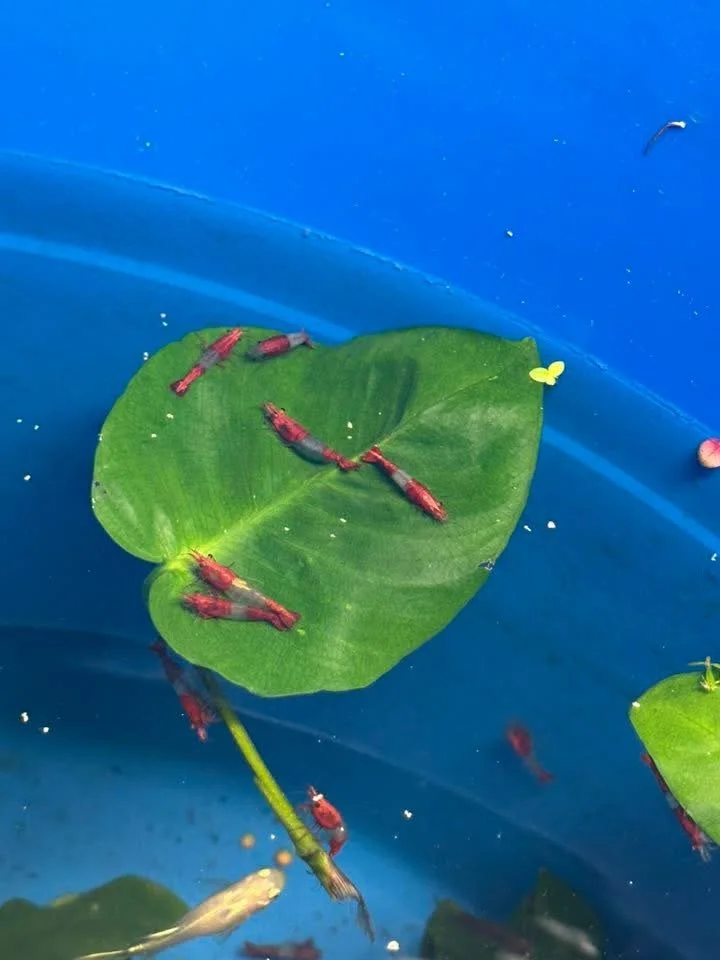
Scientific name: Neocaridina davidi
Color: Red with clear “rili” patches on the body
Size: ~1–1.25 in (2.5–3 cm)
Lifespan: 1–2 years
Temperament: Peaceful, colony-friendly
Tank size: 5+ gallons for stability
Temperature: 70–78°F (21–26°C)
pH: 6.5–8.0 (they're very flexible)
GH: 6–12 dGH
KH: 3–8 dKH
TDS: 180–300
Filtration: Sponge filter preferred (gentle flow)
Substrate: Inert or active; they’re adaptable
Plants: Moss, floating plants, fine-leaf plants help babies survive
Lighting: Moderate
Primary diet: Biofilm + algae
Supplement: High-quality shrimp pellets, blanched veggies (zucchini, spinach), occasional protein
Frequency: Light feeding 3–4× weekly; avoid overfeeding
Difficulty: Easy
Behavior: Constant breeding once stable
Gestation: ~28 days
Clutch size: 20–40 eggs
Baby care: Provide moss and powdered foods; stable parameters are key
Ideal: Snails, small peaceful fish (embers, CPDs), other Neocaridina
Avoid: Betta (sometimes ok but risky), cichlids, large tetras, anything that can fit a shrimp in its mouth
Keep ammonia/nitrite = 0
Nitrate under 20 ppm
Drip acclimate
Avoid copper in meds/fish food
Provide lots of hiding spots
Stability > perfect numbers
Scientific name: Neocaridina davidi
Color: Red with clear “rili” patches on the body
Size: ~1–1.25 in (2.5–3 cm)
Lifespan: 1–2 years
Temperament: Peaceful, colony-friendly
Tank size: 5+ gallons for stability
Temperature: 70–78°F (21–26°C)
pH: 6.5–8.0 (they're very flexible)
GH: 6–12 dGH
KH: 3–8 dKH
TDS: 180–300
Filtration: Sponge filter preferred (gentle flow)
Substrate: Inert or active; they’re adaptable
Plants: Moss, floating plants, fine-leaf plants help babies survive
Lighting: Moderate
Primary diet: Biofilm + algae
Supplement: High-quality shrimp pellets, blanched veggies (zucchini, spinach), occasional protein
Frequency: Light feeding 3–4× weekly; avoid overfeeding
Difficulty: Easy
Behavior: Constant breeding once stable
Gestation: ~28 days
Clutch size: 20–40 eggs
Baby care: Provide moss and powdered foods; stable parameters are key
Ideal: Snails, small peaceful fish (embers, CPDs), other Neocaridina
Avoid: Betta (sometimes ok but risky), cichlids, large tetras, anything that can fit a shrimp in its mouth
Keep ammonia/nitrite = 0
Nitrate under 20 ppm
Drip acclimate
Avoid copper in meds/fish food
Provide lots of hiding spots
Stability > perfect numbers