

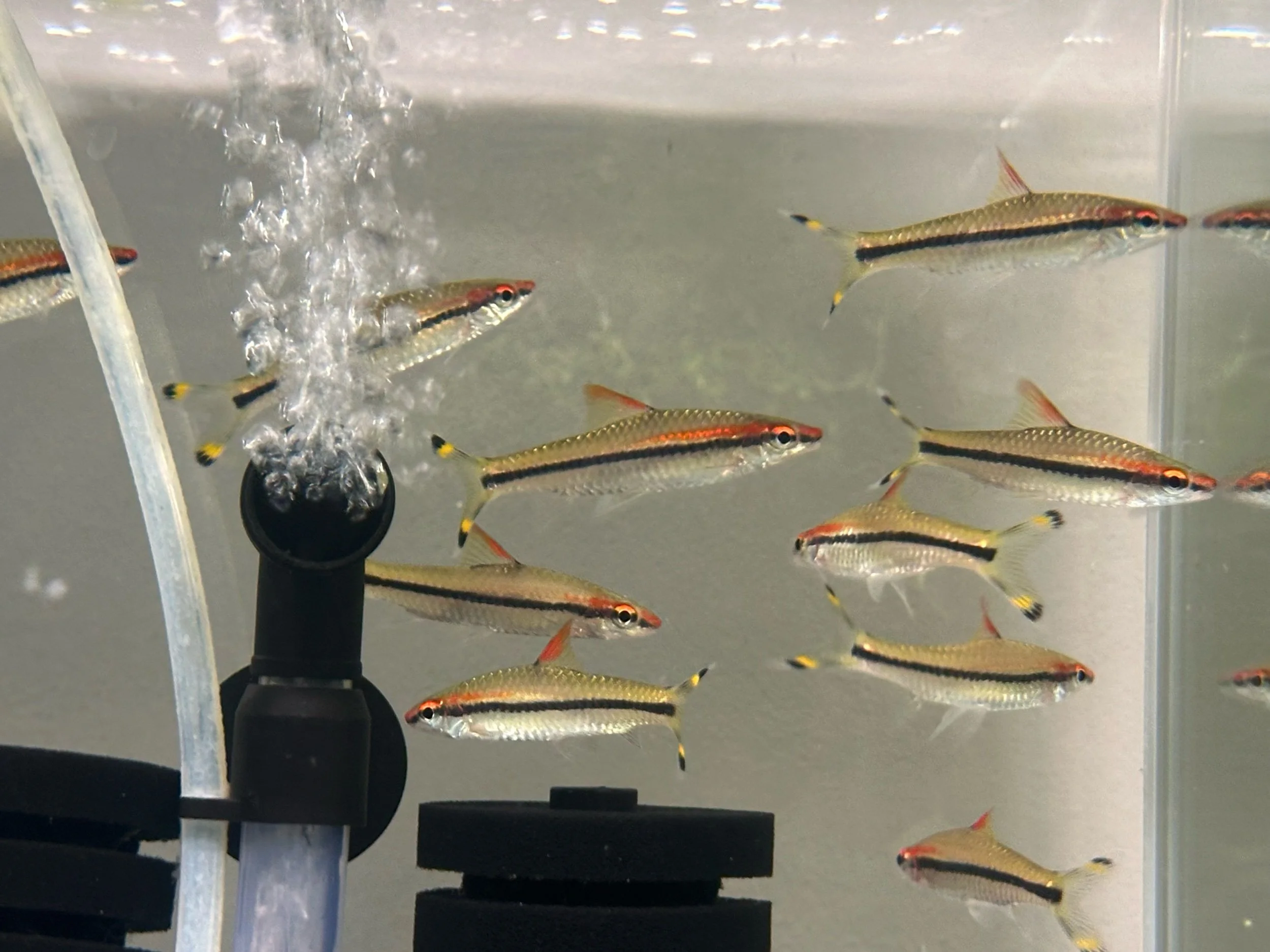
 Image 1 of 2
 Image 2 of 2
Scientific Name: Sahyadria denisonii
Other Names: Denison Barb, Red-Line Torpedo Barb
Native to Western Ghats, India
Found in clear, fast-flowing streams and rivers
Up to 6 inches (15 cm) long
Around 5–8 years with good care
Tank Size: Minimum 55 gallons (larger preferred for groups)
Water Temperature: 72–79°F (22–26°C)
pH: 6.5–7.8
Hardness: 5–25 dGH
Filtration: Strong current & well-oxygenated water
Provide open swimming space
Use rocks, driftwood, and plants for cover
Dim lighting or floating plants help reduce stress
Omnivore
Eats high-quality flakes/pellets, frozen/live foods (bloodworms, brine shrimp, daphnia)
Include some vegetable matter
Peaceful but active schooling fish
Keep in groups of 5–6+ to prevent aggression
Good with rainbowfish, rasboras, tetras, gouramis, loaches
Avoid slow or long-finned fish (like bettas, angelfish)
Difficult in home aquariums
Most sold are farm-raised
Requires large tank, soft water, and dim lighting for spawning
Sensitive to poor water quality — needs regular water changes
Active swimmers — need space and oxygen
Populations in the wild are threatened, so prefer captive-bred specimens
Scientific Name: Sahyadria denisonii
Other Names: Denison Barb, Red-Line Torpedo Barb
Native to Western Ghats, India
Found in clear, fast-flowing streams and rivers
Up to 6 inches (15 cm) long
Around 5–8 years with good care
Tank Size: Minimum 55 gallons (larger preferred for groups)
Water Temperature: 72–79°F (22–26°C)
pH: 6.5–7.8
Hardness: 5–25 dGH
Filtration: Strong current & well-oxygenated water
Provide open swimming space
Use rocks, driftwood, and plants for cover
Dim lighting or floating plants help reduce stress
Omnivore
Eats high-quality flakes/pellets, frozen/live foods (bloodworms, brine shrimp, daphnia)
Include some vegetable matter
Peaceful but active schooling fish
Keep in groups of 5–6+ to prevent aggression
Good with rainbowfish, rasboras, tetras, gouramis, loaches
Avoid slow or long-finned fish (like bettas, angelfish)
Difficult in home aquariums
Most sold are farm-raised
Requires large tank, soft water, and dim lighting for spawning
Sensitive to poor water quality — needs regular water changes
Active swimmers — need space and oxygen
Populations in the wild are threatened, so prefer captive-bred specimens