

 Image 1 of 3
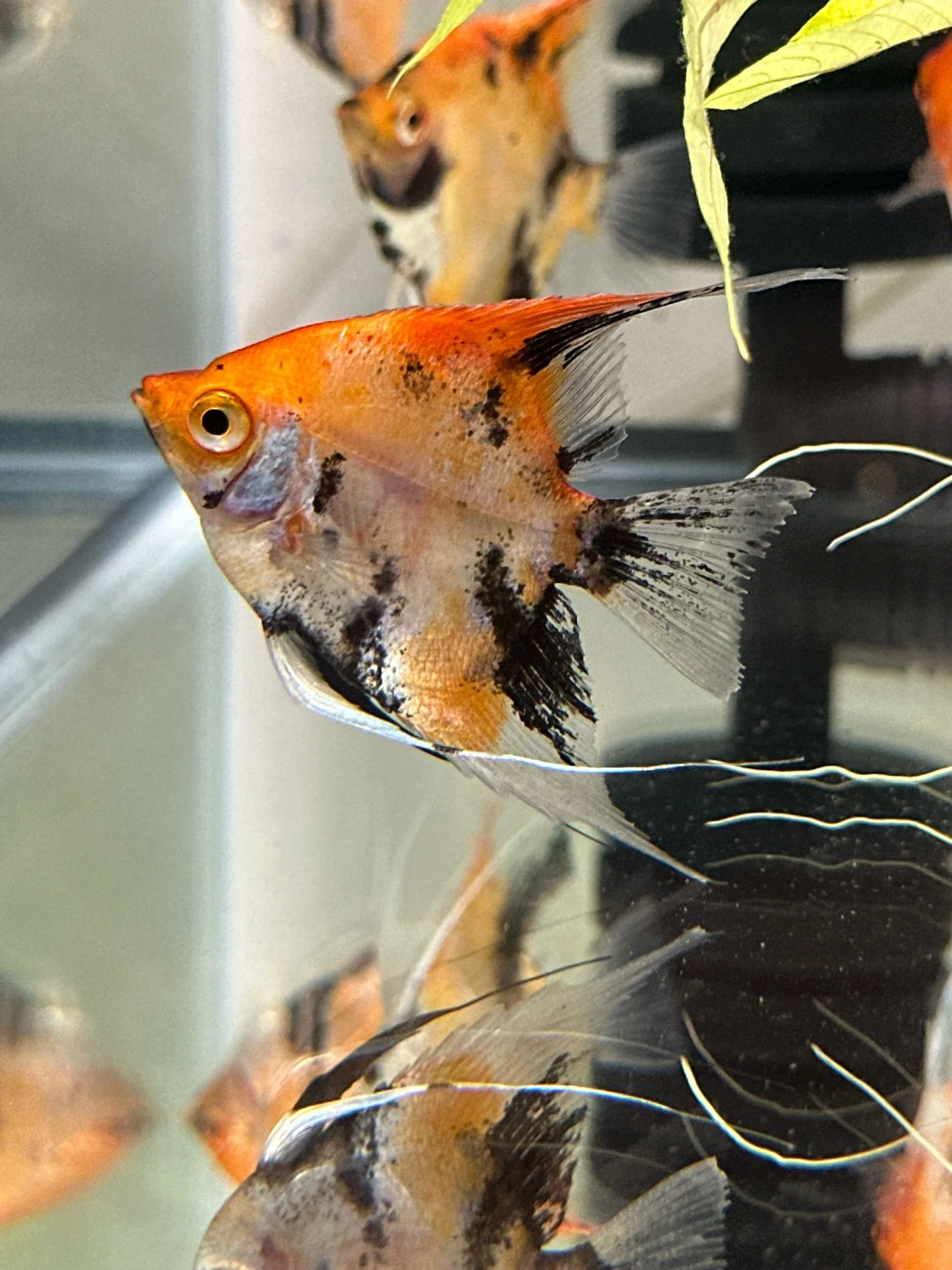 Image 2 of 3
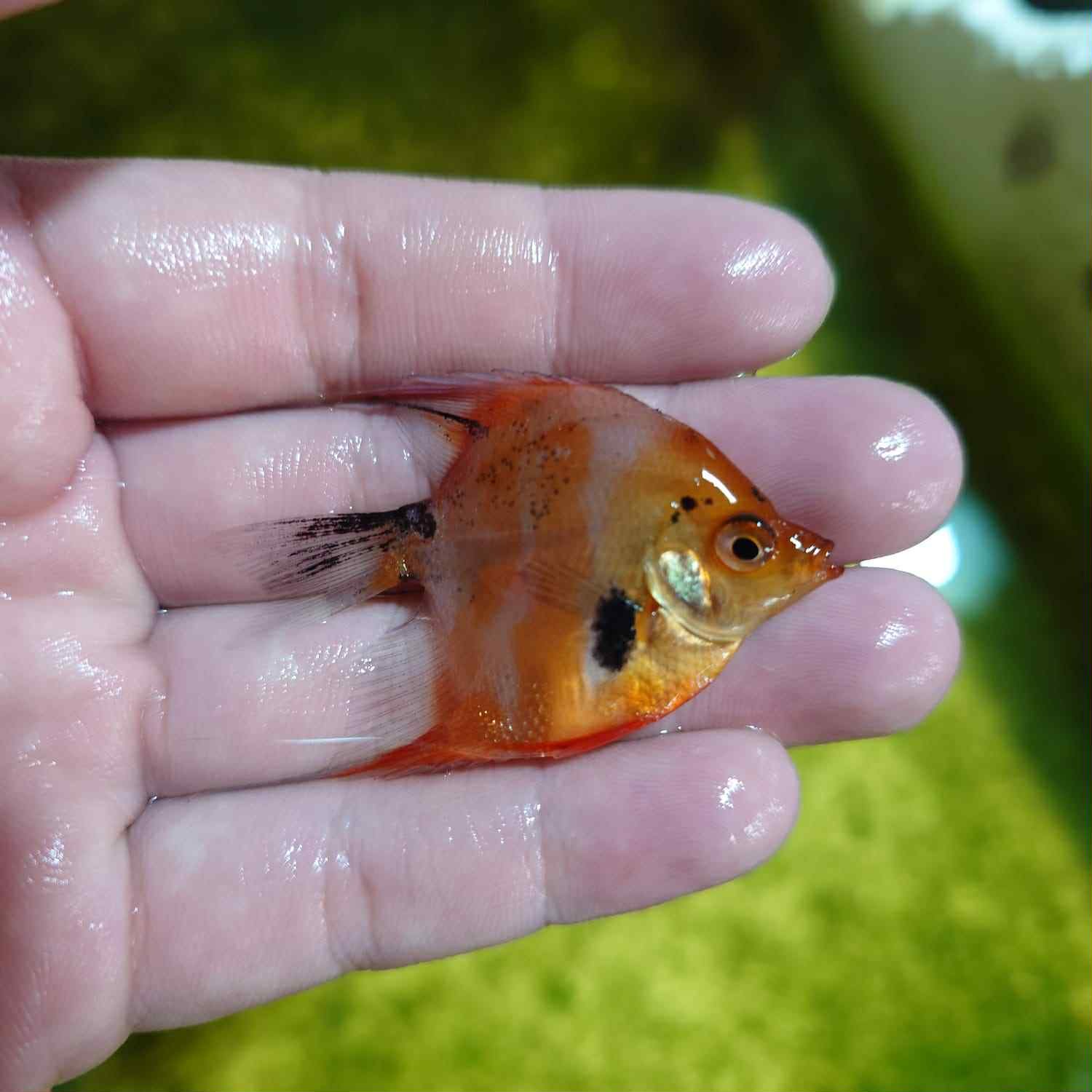 Image 3 of 3
Scientific name: Pterophyllum scalare (Koi variant)
Common name: Red Devil Koi Angelfish
Type: Freshwater tropical cichlid
Origin: Selectively bred from South American angelfish
Temperament: Semi-aggressive and territorial
Triangular, laterally compressed body
White, orange, and red koi-like pattern
Long, flowing dorsal, anal, and ventral fins
Body size up to 6 inches (15 cm), fins can make it appear larger
Minimum tank size: 30 gallons for a single pair
Water temperature: 76–82°F (24–28°C)
pH: 6.5–7.5
Hardness: Soft to moderately hard (3–12 dGH)
Tall aquariums preferred; provide plants, driftwood, and caves for territories
Omnivorous: flakes, pellets, frozen, and live foods
Protein-rich diet enhances vibrant coloration
Semi-aggressive; may chase smaller or slow-moving fish
Best with larger, peaceful community fish or other angelfish
Avoid fin-nipping species like barbs and some tetras
Weekly water changes of 20–30% recommended
Keep water parameters stable; sensitive to sudden changes
Monitor fins and body for injuries or disease
Faded colors from poor diet or stress
Fin damage from aggression or poor water quality
Susceptible to ich or fungal infections if stressed
Forms monogamous pairs
Lays eggs on flat surfaces such as slate or broad leaves
Adults guard eggs and fry; fry may need separation for higher survival
Scientific name: Pterophyllum scalare (Koi variant)
Common name: Red Devil Koi Angelfish
Type: Freshwater tropical cichlid
Origin: Selectively bred from South American angelfish
Temperament: Semi-aggressive and territorial
Triangular, laterally compressed body
White, orange, and red koi-like pattern
Long, flowing dorsal, anal, and ventral fins
Body size up to 6 inches (15 cm), fins can make it appear larger
Minimum tank size: 30 gallons for a single pair
Water temperature: 76–82°F (24–28°C)
pH: 6.5–7.5
Hardness: Soft to moderately hard (3–12 dGH)
Tall aquariums preferred; provide plants, driftwood, and caves for territories
Omnivorous: flakes, pellets, frozen, and live foods
Protein-rich diet enhances vibrant coloration
Semi-aggressive; may chase smaller or slow-moving fish
Best with larger, peaceful community fish or other angelfish
Avoid fin-nipping species like barbs and some tetras
Weekly water changes of 20–30% recommended
Keep water parameters stable; sensitive to sudden changes
Monitor fins and body for injuries or disease
Faded colors from poor diet or stress
Fin damage from aggression or poor water quality
Susceptible to ich or fungal infections if stressed
Forms monogamous pairs
Lays eggs on flat surfaces such as slate or broad leaves
Adults guard eggs and fry; fry may need separation for higher survival